
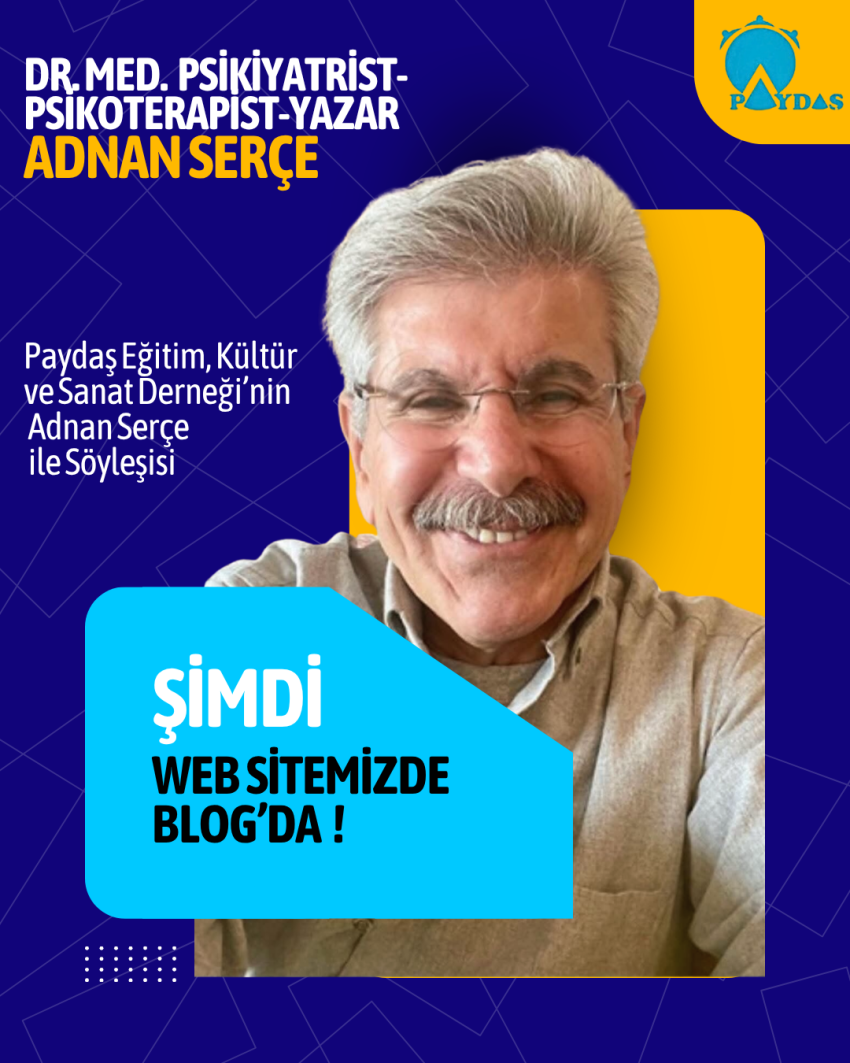
Question: Could you briefly tell us about your profession and area of expertise?
Answer:
The specialty of psychiatry-psychotherapy (as defined by the Swiss Medical Association FMH) is located at the periphery of the medical profession. A psychiatrist-psychotherapist is both a medical doctor and, unlike physicians in other specialties, does not limit themselves to addressing only the patient’s or client’s expressed complaints. Instead, they evaluate the person together with their entire life context—work, family structure, past, present, emotional relationships, and conflicts—and try to develop solutions together with them.
In classical psychiatry, such as severe depression, schizophrenia, severe bipolar disorders, and acute emotional crises that may lead to dangerous outcomes including suicide attempts or suicidal ideation, the psychiatrist takes control of the situation, makes urgent decisions, and acts actively when necessary.
Question: What have been the most important experiences you have gained throughout your career?
Answer:
It is, of course, difficult to summarize the many experiences I have gained throughout my career. However, one of the most important lessons I have learned is that human beings are not one-dimensional; they are multi-layered like a prism, and this must not be overlooked when addressing their life circumstances and complaints.
A psychiatrist-psychotherapist is not a judge, prosecutor, teacher, or moral authority. They evaluate the patient within their own life conditions, without judgment, and try to develop appropriate solutions together with them.
Question: What are the main goals of your work and what motivates you?
Answer:
In all fields of medicine, the focus is human beings and their complaints. Each specialty tries to help the patient based on its own body of knowledge.
In psychiatry-psychotherapy, the patient is approached together with their entire life, living conditions, and emotions. The psychiatrist-psychotherapist enters the patient’s life; sometimes even becomes part of it for a certain period.
I believe that those who choose psychiatry are the ones willing to come this close to human beings, their lives, and their stories—even accepting the sometimes uncomfortable aspects of this closeness. I consider myself one of them.
Question: What makes your perspective on your field unique?
Answer:
Having worked with patients and clients one-on-one for many years has taught me to understand people not only through their illnesses, but through their entire life stories and emotional worlds. The most distinctive aspect of my approach in psychiatry is to understand without judgment and to evaluate each individual within their own life context.
Question: What are your future plans and current projects?
Answer:
I have left behind my long years of working directly with patients and clients. For some time now, I have been focusing more on reading and writing.
Although I no longer work as a psychiatrist-psychotherapist, the knowledge, impressions, and countless observations I gained in my profession naturally continue to influence my writing.
So far, apart from my semi-autobiographical novel written in German for my only child, Der Schwarze Vogel und Paganini, my novels Bir Alaturka Odysseia, Ve Erirdi Zaman, and Elma Ağacı have been published in Turkey. A collection of short stories is also on the way…
Question: What advice would you give to idealistic young people who want to build their future in the best possible way?
Answer:
As is well known, if we exclude the time we spend sleeping, the time we spend at home with loved ones or hobbies is often much shorter than the time we spend working. For this reason, one’s profession leaves a deep imprint on life.
The decision about which profession to choose—that is, which track one’s life will follow—takes place at a very young age, when life experience is still limited.
There are millions, perhaps even billions, of people in the world who are unhappy because they are forced to work in professions chosen only for financial survival, rather than those aligned with their temperament and desires.
Therefore, I strongly advise young people to listen carefully to their inner voice when choosing a profession, while also considering the advice of their surroundings and parents.